
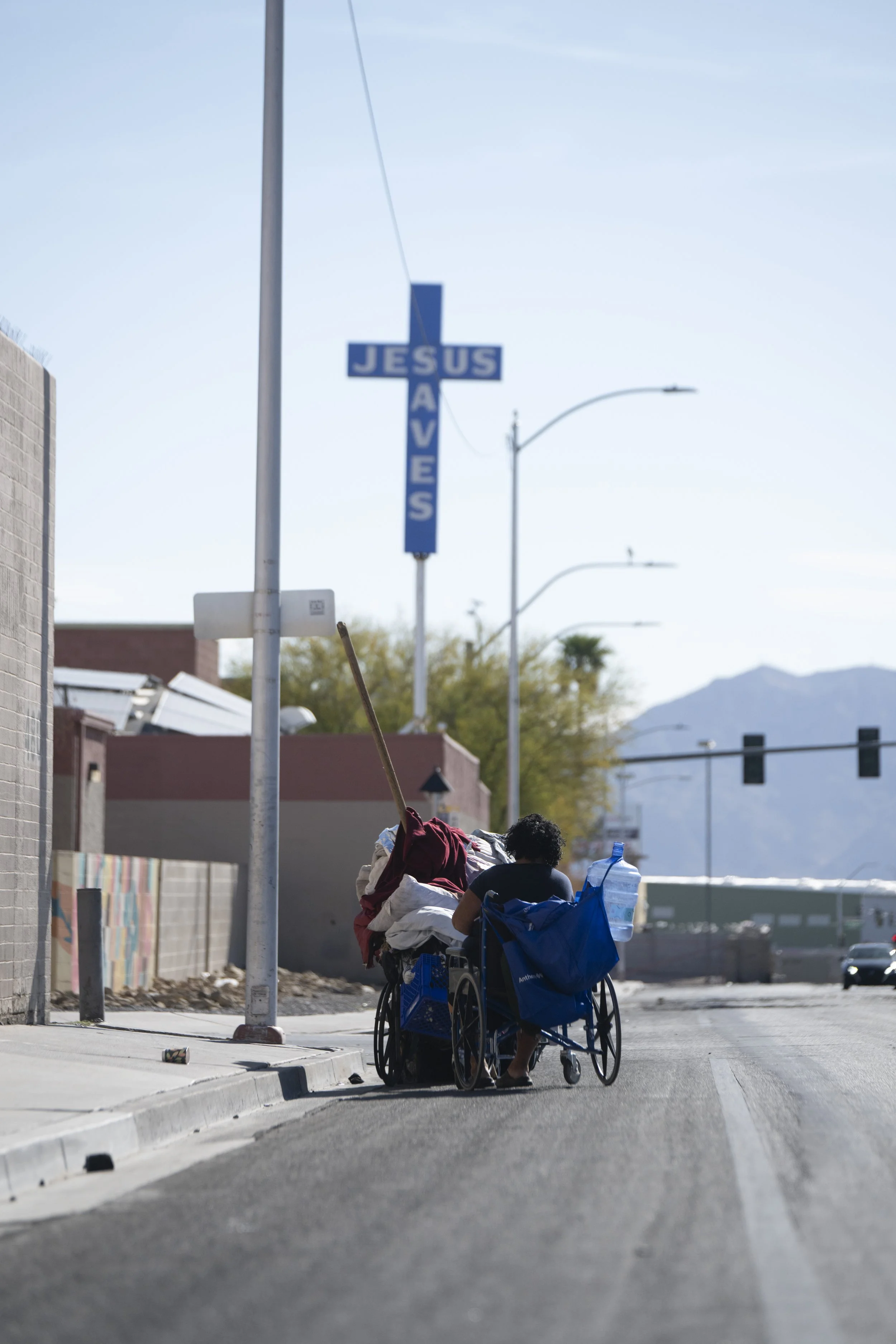
About the Mission
OUR MISSION
To serve those in need through food,
shelter, daily needs and addiction recovery,
offering hope to individuals and families through Jesus Christ.
The Las Vegas Rescue Mission
provides services without regard to race, color, national origin or ancestry, age, sex, sexual orientation, marital or domestic partnership status, gender, gender identity or expression, physical or mental disability, genetic information, or veteran status, in accordance with all applicable state and federal laws.
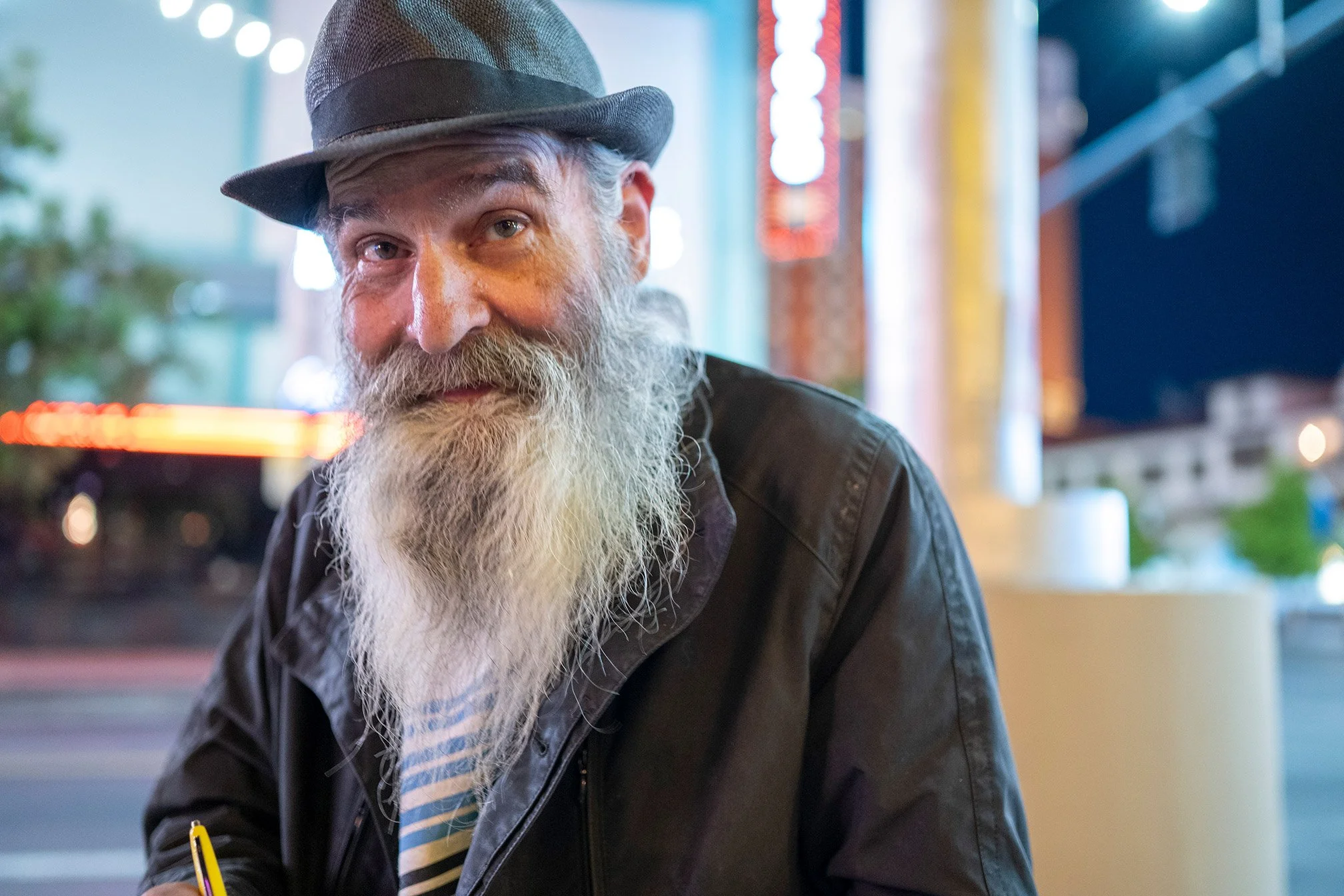
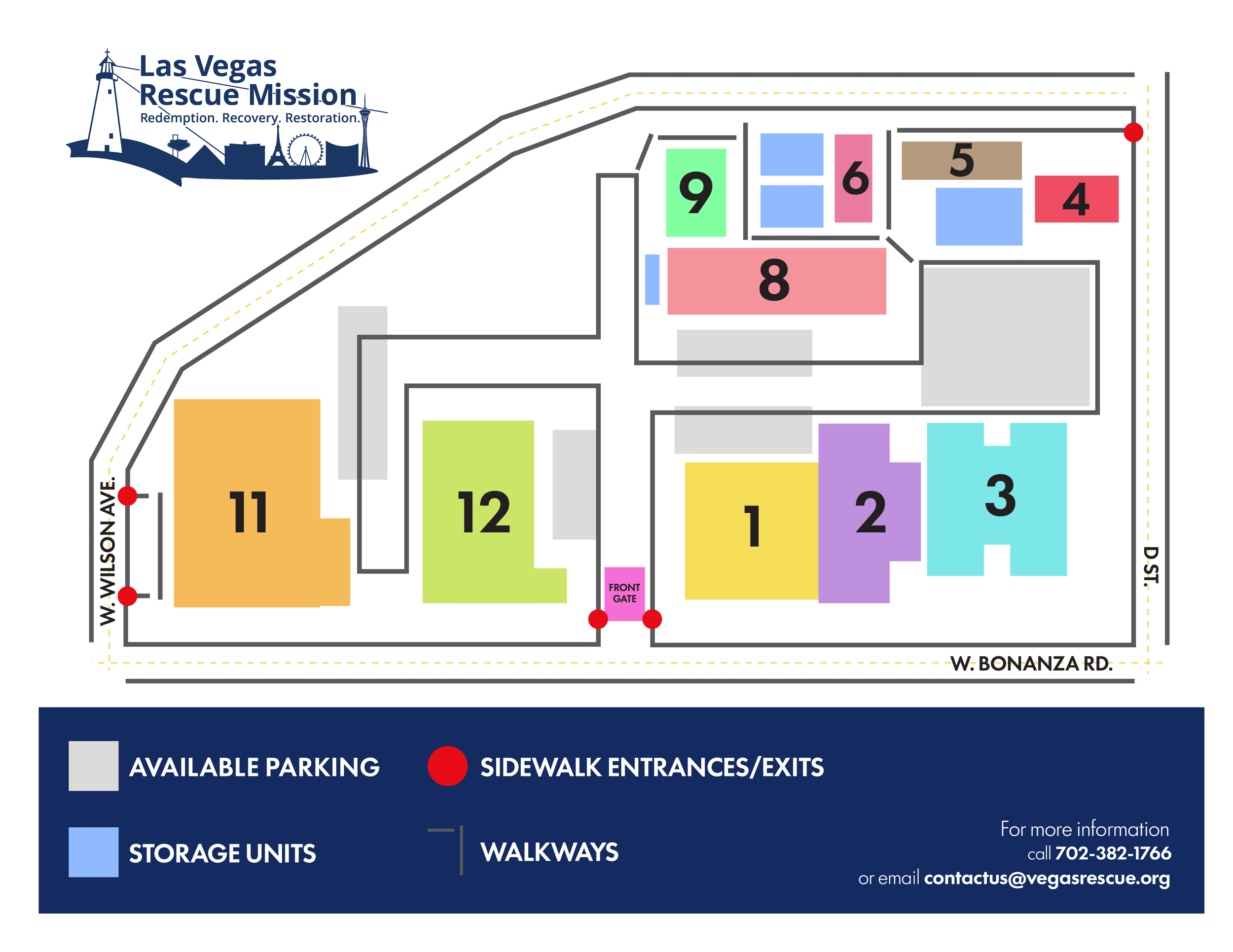
Founded in 1970, the Las Vegas Rescue Mission (LVRM) started with a small storefront building that included the chapel, kitchen and a shelter that could house a few men. Today, LVRM campus takes up two city blocks in downtown Las Vegas, helping hundreds of men, women and their children daily, and provides approximately 30,000 meals each month.
A Legacy of Service
Since 1970, we've been more than a shelter—we're a catalyst for transformation. Learn about our evidence-based programs, meet the people whose lives have been changed, and see how your community support creates lasting solutions to homelessness in Southern Nevada.
Explore our story, programs,
and the difference we're making together.
Discover Our Mission & Impact
Learn
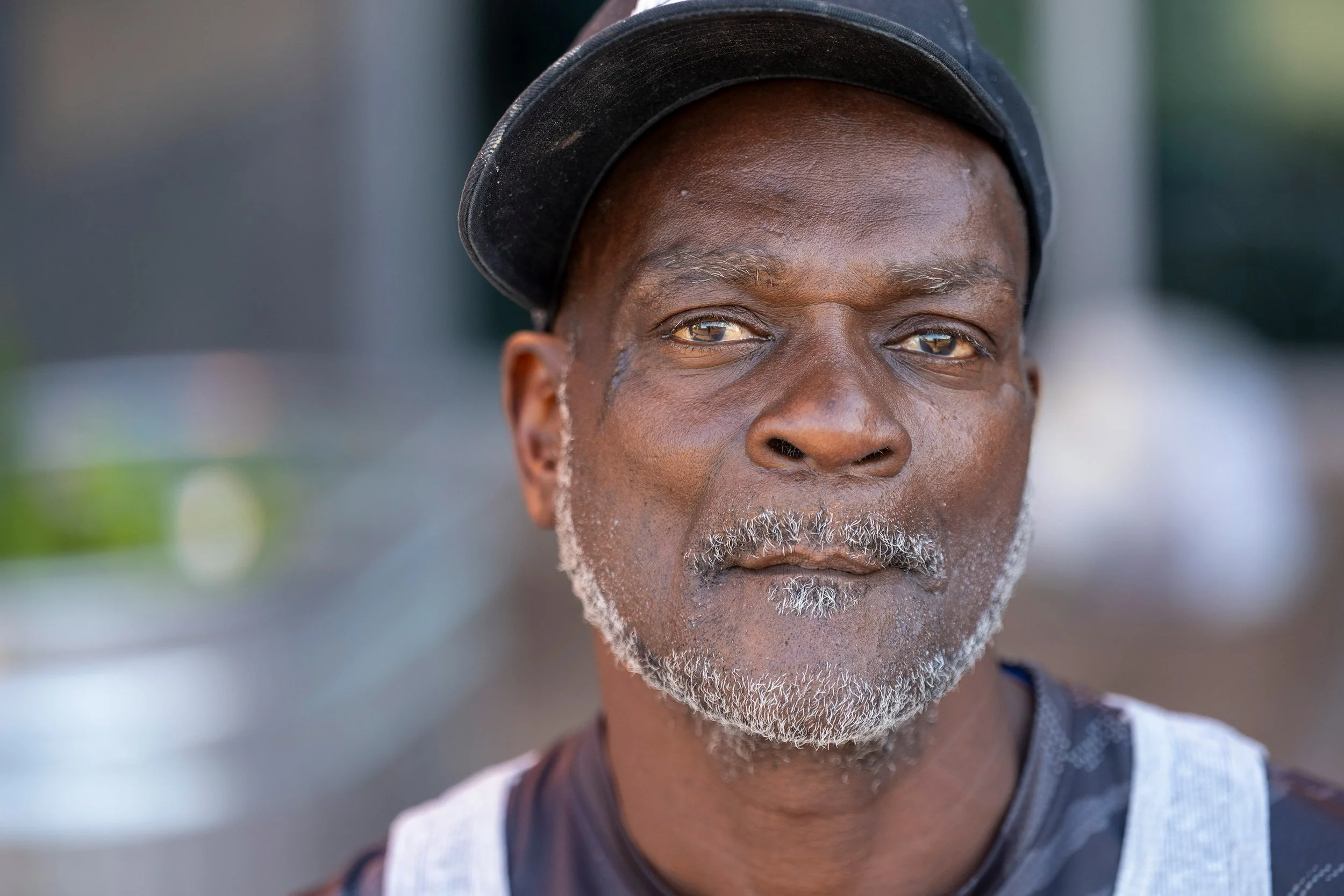
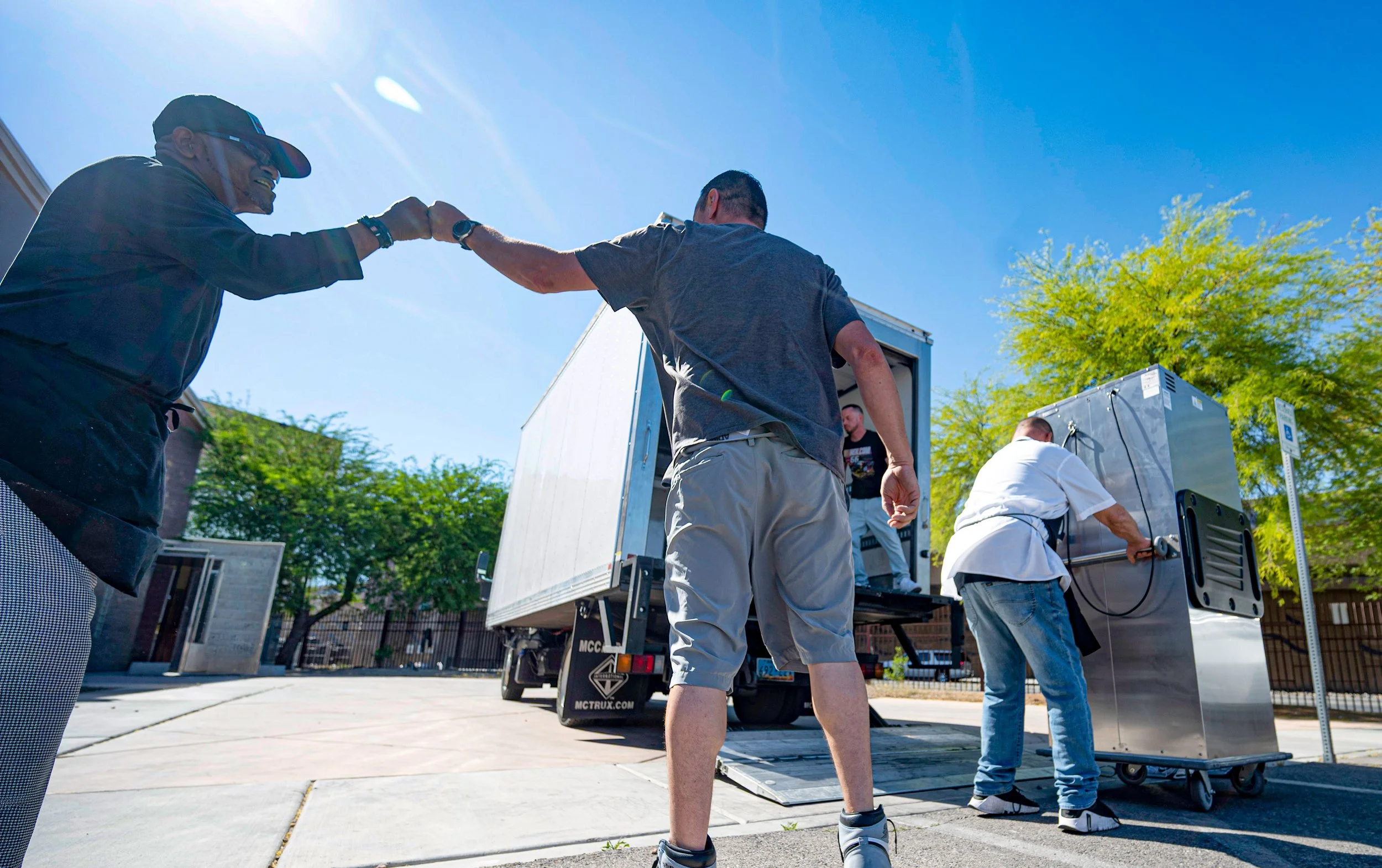
Our Home
Our History
LVRM was founded in 1970 by a pastor and six businessmen who had a calling to help those who were homeless and hungry. Together, they secured a tiny storefront at 414 West Bonanza Road. By God’s grace, they provided sandwiches and drinks, along with mats and blankets for men to eat and sleep away from the elements.
LVRM is more than just a shelter; we stand as a beacon of hope. We continue to adapt to meet the needs of men, women and their children in an ever-changing society. Through effective, innovative Christian recovery programs, the Mission provides a path for those who want to escape the despair of the streets.
Humble Beginnings
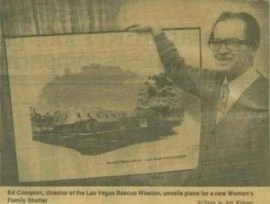
LVRM Founding Director Ed Compton unveils plans
for the new women’s family shelter.
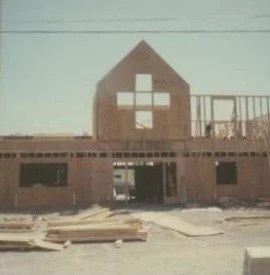
New Chapel/Administrative Building
under construction in 1991.
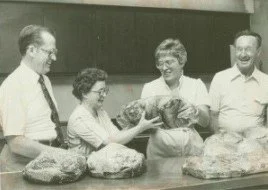
Ed Compton and staff sorting much-needed donations